One resume for multiple jobs: does it work?
One resume can work for several jobs when they ask for the same things: the same role, at a similar level, with the same must-have skills. Once the postings ask for different skills, titles or industries, send each one a tailored copy of a single base resume instead.
Below: how to tell which case you are in, how many versions to keep, what should change between copies and what never should.
Can I use one resume for multiple jobs?
Yes, if the jobs are the same kind of job. A backend engineer resume can go to many backend engineer postings with small edits. It cannot go to a backend posting and a data analyst posting unchanged, because each reader checks it against their own list of requirements. Paste each posting into the resume keyword scanner to see how far your one resume is from it.
A quick test: put two postings side by side and list each one's must-haves. If most of them overlap, one resume with a tailored summary will do. If they do not, you need a second version.
The match score in hiredby.app shows why the overlap matters. It counts each must-have twice and each nice-to-have once, and a requirement your resume does not show counts zero. So one resume can score well against the posting it was written for and badly against the next one, with no line changed.
How many versions of my resume do I need?
One base resume for each kind of role you apply for, plus a lightly tailored copy for each application.
Say you are a designer applying to product design roles and to UX research roles. Those postings ask for different evidence, so keep two bases: one that leads with shipped product work, one that leads with research studies. Each application then gets a copy of the right base, with its summary, bullet order and skills adjusted to that posting.
More bases than you need are hard to keep in step. When you correct a date or add a new job, every base needs the change.
Should my resume be different for every job?
Somewhat. The summary, the order of your bullets and the skills list should change for each job; your employers, titles, dates and results should not.
Tailoring rewords and reorders what is true. A copy that adds a skill you lack because the posting asks for it is a different claim, and it will not hold up in an interview. In the hiredby.app writing eval of 2026-11-15, the tailoring case came back with no number the person had not given, and a check in code drops any that slip through.
The steps are in how to tailor your resume to a job description.
What is a master resume?
A master resume is a long, private document that holds everything you have done: every job, project, result, course and skill, in more detail than one application needs. You never send it. You copy from it when you build a base or tailor a copy, so a line cut for space is not lost.
In hiredby.app, your profile and your other resumes play that part: when you tailor for a job, the report looks for each requirement there too, and marks one it finds as "found in another resume" so you can bring the line in.
How to keep one base resume and a copy for each job
Edit the base when something changes for good, like a new job or a corrected date, and make a new copy for each application. In hiredby.app, Tailor for a job on a base resume makes that copy and names it after the company. Copy only makes a plain copy with no AI and no charge, and AI tailoring costs 3 credits.
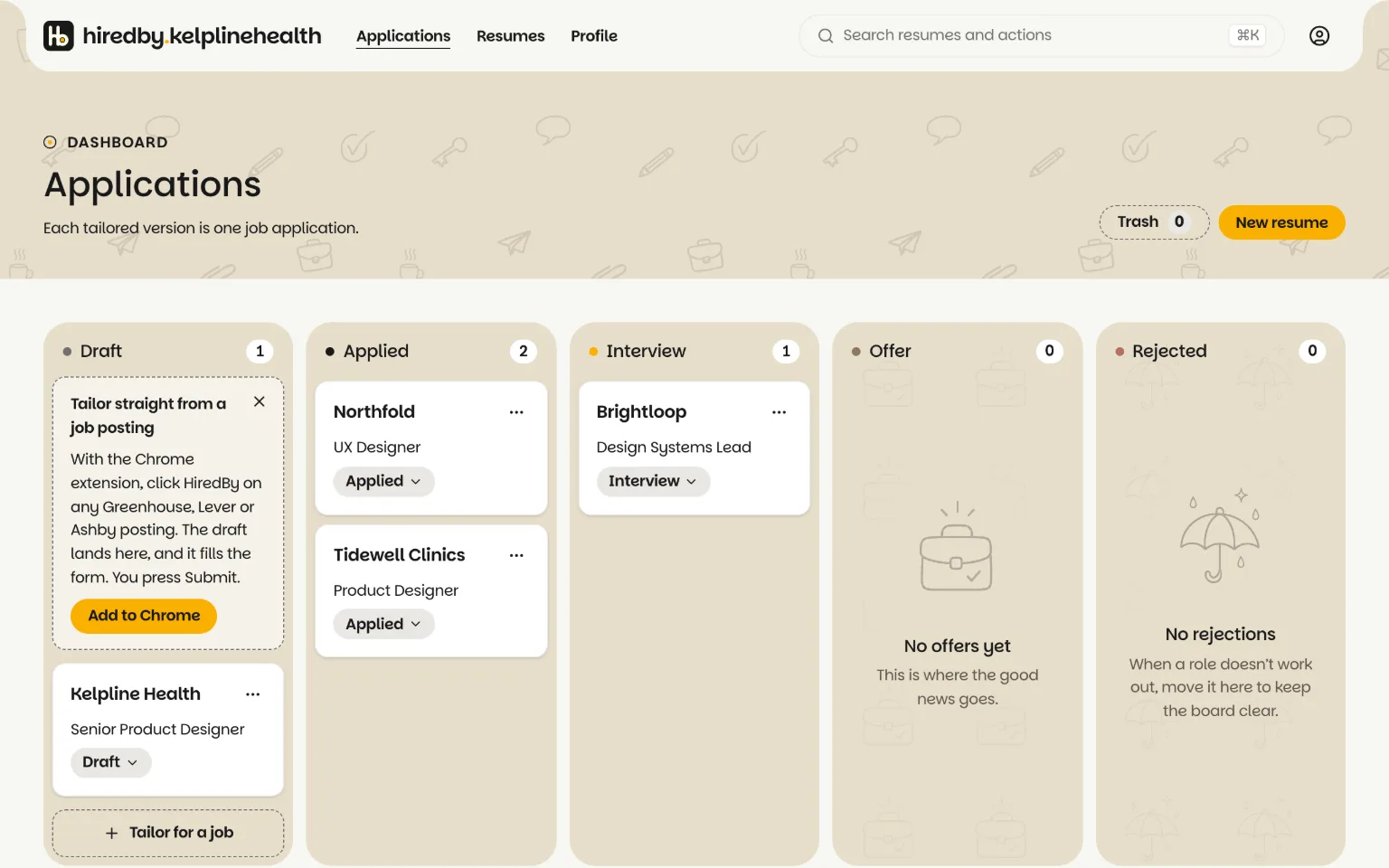
Each copy is a card on the Applications board, so you can see which version went to which employer and where each application stands. Before you send one, Compare with base shows what that copy changed, line by line.
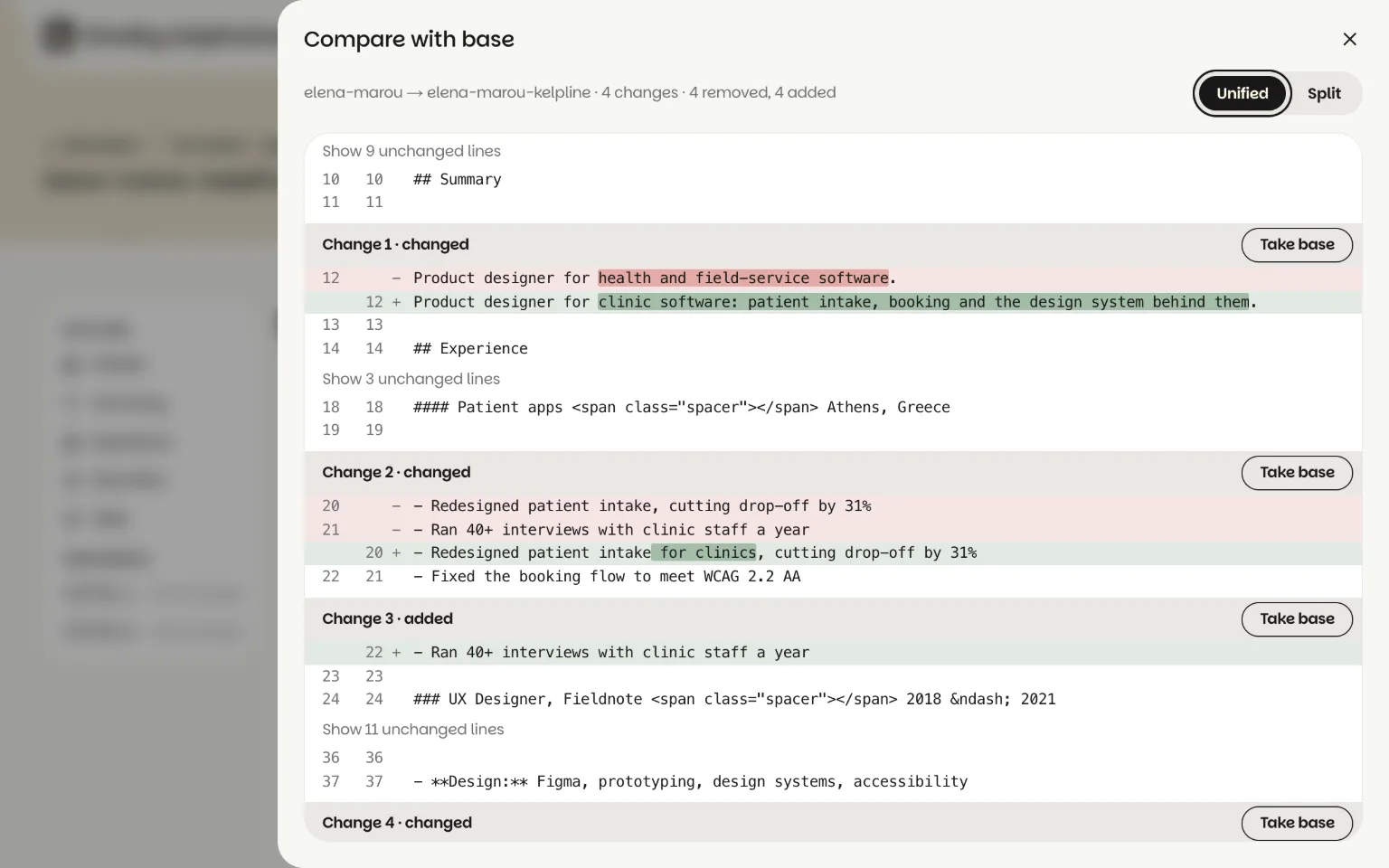
A line such as Why {OFFER_COMPANY}? fills in each copy's company, and the base resume refuses to print with the blank left in; the syntax reference explains it. Then export each copy as a PDF for free, or read the tailoring manual for each screen.